The PMP Certification in 2026: Your Complete Guide to the PMBOK 8th Edition Era
1. Introduction: The Strategic Evolution of Project Leadership
On July 9, 2026, the project management profession reached a definitive milestone with the transition to the PMP® exam aligned with the PMBOK® Guide – 8th Edition. This evolution marks a strategic shift from the era of rote memorization to a modern paradigm of real-world value delivery and business impact. In today’s competitive landscape, the PMP serves as much more than a credential; it is a high-impact career accelerator that demands a transition from “process-checker” to “value architect.” The 2026 update ensures that the PMP remains relevant by integrating dynamic, value-driven environments with overarching business strategy.
To test your knowledge, dive into our dedicated PMP domain quizzes: PMP Domain 1: People, PMP Domain 2: Process, and PMP Domain 3: Business Environment.
2. Defining the 2026 PMP: Beyond the Professional Title
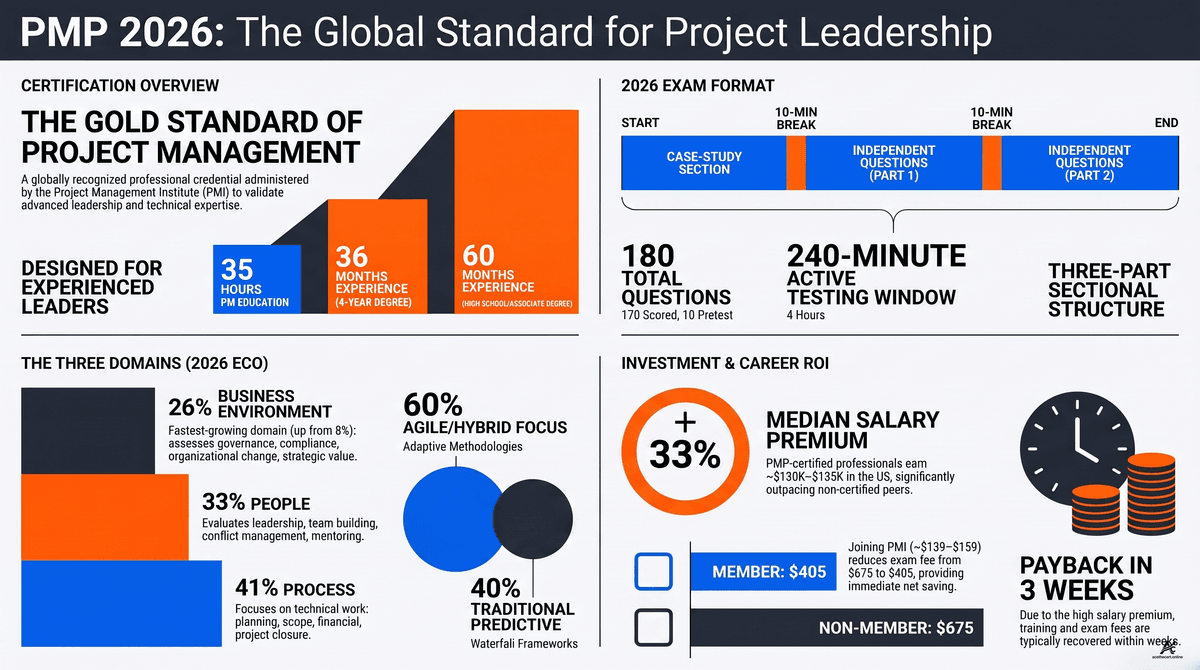
The PMP remains the most sought-after credential in global project leadership, underscored by industry data showing that certified professionals command a salary increase of 25% or more compared to their peers. In the 8th Edition era, the certification evaluates a candidate’s ability to operate within a “Triple Methodology” framework, seamlessly integrating predictive, agile, and hybrid approaches through systems thinking. PMI has effectively moved away from rigid, process-heavy frameworks, favoring a model built on “principles and performance domains.” This shift ensures that project leaders are equipped to navigate ambiguity and prioritize outcomes over outputs. Joining this elite tier of professionals requires meeting a high bar of eligibility and proven experience.
3. Navigating Eligibility: Education, Experience, and the 10-Year Look-Back
PMI maintains the global prestige of the PMP through a rigorous vetting process designed to ensure only the most capable leaders enter the ranks. The eligibility requirements are strategically structured to validate both formal education and practical, on-the-job leadership.
Candidates must satisfy one of two primary paths:
- Four-Year Degree Holders: Must demonstrate 36 months of unique, professional project management experience.
- Non-Degree Holders (High School/Associate Degree): Must demonstrate 60 months of unique professional experience.
Crucially, PMI utilizes a 10-year look-back window, requiring that all qualifying experience occurred within the last decade. All candidates must also document 35 contact hours of formal project management education. For those in the “elite tier” who have graduated from GAC-accredited academic programs, PMI offers a strategic advantage: a reduction in the required months of professional experience, recognizing the high quality of their formal project management training. Once eligibility is confirmed, the candidate must navigate the financial investment of the certification.
4. The Financial Blueprint: Membership Math and Fee Structures
A strategic project manager views the PMP journey through the lens of a cost-benefit analysis. While the standard exam fee for non-members is $675, the “Membership Math” reveals a significant financial advantage to joining PMI. Membership reduces the initial exam fee and offers a crucial “financial hedge” regarding retakes—$275 for members compared to $375 for non-members.
Furthermore, modern prep platforms like PrepPilot have introduced a $10 “payback” for students who submit their exam scores to the platform, and some offers even include a 90-day extension guarantee as a hedge against failure. These incentives, combined with the reduced member fees, ensure that the financial investment is optimized before entering the high-stakes testing environment.
5. Exam Architecture: 240 Minutes of Situational Judgment
The PMP exam is a grueling 240-minute assessment of cognitive stamina and situational judgment. Candidates must answer 180 total questions, consisting of 170 scored items and 10 unscored pretest items used for psychometric calibration. Time management is the most critical tactical variable; the “80-second rule” (averaging 1.2 minutes per question) is the standard pacing metric.
To manage this window effectively, I recommend the Checkpoint Strategy:
| Pacing Checkpoint | Recommended Elapsed Time | Target Question Progress |
|---|---|---|
| Checkpoint 1 | 40 Minutes | Question 30 |
| Checkpoint 2 | 80 Minutes | Question 60 (Submit Section 1) |
| Checkpoint 3 | 120 Minutes | Question 90 |
| Checkpoint 4 | 160 Minutes | Question 120 (Submit Section 2) |
| Checkpoint 5 | 200 Minutes | Question 150 |
| Checkpoint 6 | 235 Minutes | Question 180 |
The exam utilizes Section-Locking rules: once you submit a block of 60 questions and initiate a 10-minute break, those questions are permanently locked. The 2026 format focuses on interactivity, featuring Case Study sets (one scenario with five linked questions), pull-down lists, and drag-to-graph exercises that mimic modern digital dashboards. Success in these sections is determined by a sophisticated scoring model.
6. The Passing Paradox: Psychometric Scoring and Performance Bands
In modern professional testing, the concept of a “fixed pass percentage” is a myth. PMI employs a psychometric scoring model that evaluates your ability to handle “Expert-level” questions. Performance is reported through four rating categories: Above Target (AT), Target (T), Below Target (BT), and Needs Improvement (NI).
The 2026 exam reflects a methodology split of approximately 60% Adaptive/Hybrid and 40% Predictive questions. Candidates must demonstrate proficiency across three specifically weighted domains:
- People (33%): Focused on servant leadership, conflict resolution, and removing team impediments. Practice with our PMP Domain 1: People quiz.
- Process (41%): Managing the technical rigors of project execution. Test your knowledge with the PMP Domain 2: Process quiz.
- Business Environment (26%): This domain has tripled in weight (up from 8%) and now serves as a strategic warning for candidates, as it incorporates AI integration, sustainability, and organizational compliance. Prepare with the PMP Domain 3: Business Environment quiz.
7. Mastering the Prep: Resources, Rhythms, and Readiness Scores
To pass on the first attempt, you must select a “Minimum Viable Stack” of resources. A typical successful timeline involves 60–120 hours of study over 2–3 months. The current authoritative stack includes:
- PMI Study Hall: Essential for acclimating to the “Expert-level” ambiguity of the actual exam.
- The PM PrepCast: Features a detailed “explanation engine” and customizable modes for targeted drills.
- TIA (Andrew Ramdayal): Critical for mastering the “PMI Mindset” and the core principles of servant leadership.
- PrepPilot: The cutting edge of 2026 prep, utilizing AI coaching and a 9-dimension Readiness Score. It features the Mindset Fingerprint™ and Reflex Diagnostic, which analyze your “wrong instincts” to drill you out of negative decision-making patterns.
Target Benchmarks: Aim for 65% on Study Hall (including expert questions) or 75% on PrepCast before scheduling.
8. Life After the Exam: Renewal, PDUs, and the Talent Triangle
Earning the PMP is not a destination but the beginning of “Continuous Certification.” Professionals must engage with the Continuing Certification Requirements (CCR) system to maintain their status. This involves a 3-year cycle where you must earn 60 Professional Development Units (PDUs).
These units must align with the PMI Talent Triangle:
- Ways of Working (Technical skills)
- Power Skills (Leadership and interpersonal skills)
- Business Acumen (Strategic and business knowledge)
Failure to report these units via the CCRS (Continuing Certification Requirements System) results in a Suspended status, leading eventually to a Lapsed credential. This commitment to continuous growth is the final step in the professional roadmap.
9. The Path to 2026 Certification: A Step-by-Step Roadmap
Treat the PMP journey as a high-priority project. Follow this sequence for maximum efficiency:
- Phase 1 (Education): Acquire the 35 contact hours through a reputable provider.
- Phase 2 (Application): Submit your PMI application, documenting 3–5 years of experience within the 10-year look-back window.
- Phase 3 (Foundation): Study the PMBOK® 8th Edition and Agile Practice Guide.
- Phase 4 (Calibration): Engage in phase-based mock preparation—moving from foundation drills to full-length stamina tests and AI-driven readiness scoring.
- Phase 5 (Execution): Sit for the exam at a Pearson VUE center or via online proctoring, pass, and immediately initiate your PDU cycle.
10. Conclusion: Securing Your Professional Future
The PMP in 2026 is the hallmark of a leader who can thrive amidst the complexities of AI integration, sustainability mandates, and hybrid delivery models. The global business environment no longer requires mere task managers; it demands architects of value who possess the mindset to turn uncertainty into opportunity.
Your journey toward the PMP is the most significant investment you can make in your professional future. Transition from “studying the content” to “developing the mindset” of a modern leader. The 240-minute challenge is your gateway to a higher tier of leadership. Secure your future today.
Frequently Asked Questions
What are the PMP eligibility requirements in 2026?
How much does the PMP exam cost?
What domains are tested on the PMP exam?
How many questions are on the PMP exam?
How do I renew my PMP certification?
Ace The Cert Team
The official editorial team for Ace The Cert.
Related Posts
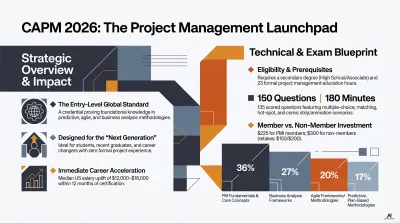
The Ultimate 2026 CAPM Certification Guide: Your Gateway to Project Management
Pass the CAPM exam on your first try. Learn eligibility, costs, the 4 domains, study roadmap, and career paths for aspiring project managers in 2026.
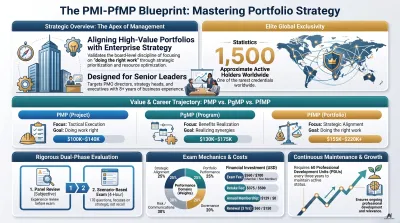
The Complete PfMP Guide: Master Portfolio Management Professional Certification in 2026
Earn the PfMP and master portfolio management. Learn eligibility, 5 domains, panel review process, and proven strategies to pass the PfMP exam on your first try.
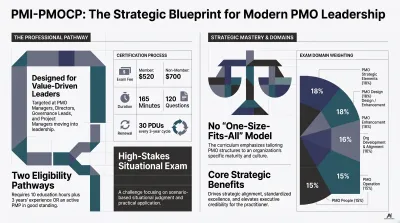
The Complete PMI-PMOCP Guide: Master PMO Professional Certification in 2026
Lead strategic PMOs. Master the PMI-PMOCP with our guide to eligibility, 6 domains, PMO Value Ring, exam structure, and proven prep strategies for 2026.
Comments are not configured for this site.